
Prayer to Break the Spirit of Divination 2
General Classification of Fortune-Telling, Divination, and Consulting Spirits
Fortune-Telling:
Fortune-telling refers to practices that use personal information such as facial features, palm lines, date and time of birth (known as "Ba Zi"), and the number of strokes in one's name—combined with esoteric calculation methods to predict a person's fate, including blessings and misfortunes. It falls under the category of metaphysics.The academic study of fortune-telling is called "Yi Studies" (易学), which centers on theories like Yin-Yang, the Five Elements, the Heavenly Stems and Earthly Branches, and the Bagua (Eight Trigrams) from Fuxi. In ancient China, those who specialized in fortune-telling were known as "fortune-telling masters" (算命先生).
Narrowly defined, fortune-telling refers specifically to predictions based on a person’s birth data (Ba Zi). Broadly defined, it includes a wide and complex range of techniques and systems.
Physiognomy:
This practice analyzes a person's facial features, palm lines, bone structure, and body posture to assess their personality traits, innate talents, and health conditions, in order to predict whether a person has a good or bad character and whether their destiny is fortunate or unfortunate.
Astrology :
Ancient people believed that nature is closely related to human destiny. Therefore, they often observed natural phenomena to predict life and death, blessings and misfortunes. The most common methods include astrology and feng shui.
Character Analysis :
This method uses the number of strokes in a person’s name, combined with the I Ching, Yin-Yang, and the Five Elements, to interpret fate and fortune. Some also use the Eight Characters (Ba Zi)—a system based on one's birth time—to calculate destiny. If the Ba Zi align well, it is considered highly auspicious; if not, it indicates great misfortune.
Divination Techniques :
Qi Men Dun Jia (奇门遁甲) is a complex Chinese metaphysical system used to determine auspicious timing and spatial positioning.
Spirit Communication and Mediumship:
Practices such as spirit communication, summoning the dead, invoking deities, crossing into the underworld, speaking with the deceased, spirit possession, and ghost manifestations are all collectively referred to in the Bible as “consulting the dead” or “having fellowship with spirits.” This means attempting to call back the souls of the dead to speak with the living.
(However, in reality, it is not the soul of the deceased that returns, but an evil spirit impersonating that person.)
Divination:
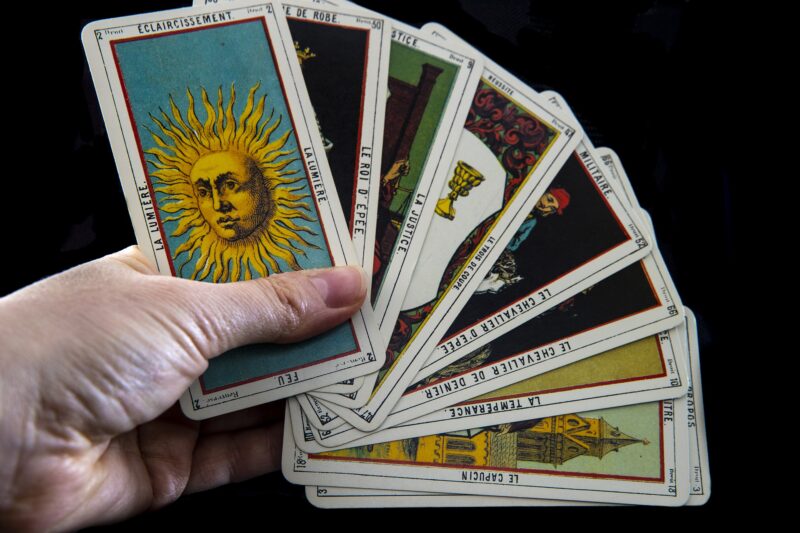
This involves using tools such as tortoise shells, coins, bamboo sticks, cards, and other symbolic objects or omens to predict future blessings or disasters.
2. Categories of Divination (from Wikipedia):
-
- Prediction and Prognostics "The most primitive, clumsy, yet most enduring method is the recording of a series of strange events."Ancient Chinese history often documented unusual occurrences, natural changes, and other information. Government institutions in ancient China used these records to predict long-term strategic matters. Many modern scientific developments have their roots in such ancient forms of 'divination.' This conclusion is supported by the research of Joseph Needham.
- Drawing Lots (Casting Lots)
- This can involve objects like wooden sticks, bones, stones, or beans. Many modern board and card games evolved from these types of divinatory practices.
- Augury
This type of divination provides predictions and can be qualitative (e.g., based on shapes or proximity to an object). Dowsing (divining with sticks) developed from this practice. In ancient Rome, particularly in the Etruscan civilization, priests practiced haruspicy, which involved inspecting the entrails of sacrificial animals (specifically extispicy) to determine whether the meat was fresh and acceptable for the gods.
- Free-form Divination
- This type of divination doesn’t follow any fixed method and is often a variation or extension of other types. The inspiration usually comes from what the diviner randomly sees or hears. Some Christians and members of other religions use Bibliomancy (divining with the Bible) — asking a question, then opening the Bible at random for insight. Other examples include observing energy or aura (Qi), New Age Feng Shui, intuition, and Taoist talismans.
The most common form is astrology, generally divided into Indian astrology or Vedic astrology (Jyotish), Western astrology, and Chinese astrology. In addition to these three systems, many other civilizations have their own forms of astrology.
Source: Pastoral Ministry Department of End-Time Ministry (Please notify us promptly if any copyright infringement is involved.)