Prayer to Break the Spirit of Divination 3
Methods of Divination:
-
- Means of divination can include stars, energy (qi), salt, books, mirrors, animals such as roosters or parrots, and more.
- In China, qi-based divination can utilize almost anything imaginable—astronomy, geography, the Nine Provinces and Eight Trigrams, birth and death, sickness and health, rise and fall, success and failure—all can be used for divination.
Schools of Divination:
In China, the following methods of divination are common:
- Divination by casting lots (卜筮): This involves using tools like turtle shells or yarrow stalks to predict events through the Eight Trigrams. Different methods were used in different historical periods, and there were innovations over time—for example, it is said that Dongfang Shuo’s Classic of Spirit Chess (灵棋经) used specially made chess pieces and incantations for divination.
- Physiognomy (相术): This involves predicting fortune or misfortune by observing a person’s demeanor, temperament, facial features, and physical characteristics.
- Astrology (占星): Known in China as Seven Governors and Four Remainders (七政四余), astrology was primarily used to reveal the nation's stability, the ruler’s fortune or disaster, and the peace or unrest of the realm. Early Chinese astrology was closely linked to astronomy, but the two gradually diverged over time.
- Fu Ji (扶乩): This is spirit-writing divination, where a sieve with a willow brush attached is used by mediums through ritual to "communicate with deities," writing their messages onto a sand tray.
- Drawing Lots (求签): At temples, after presenting their problems to the deity, people draw lots containing words or poems (commonly known as “divination poems”) representing the deity’s will. They may also use jiaobei (moon blocks) to confirm the result.
2. Categories of Divination (from Wikipedia):
-
- Prediction and Prognostics "The most primitive, clumsy, yet most enduring method is the recording of a series of strange events."Ancient Chinese history often documented unusual occurrences, natural changes, and other information. Government institutions in ancient China used these records to predict long-term strategic matters. Many modern scientific developments have their roots in such ancient forms of 'divination.' This conclusion is supported by the research of Joseph Needham.
- Drawing Lots (Casting Lots)
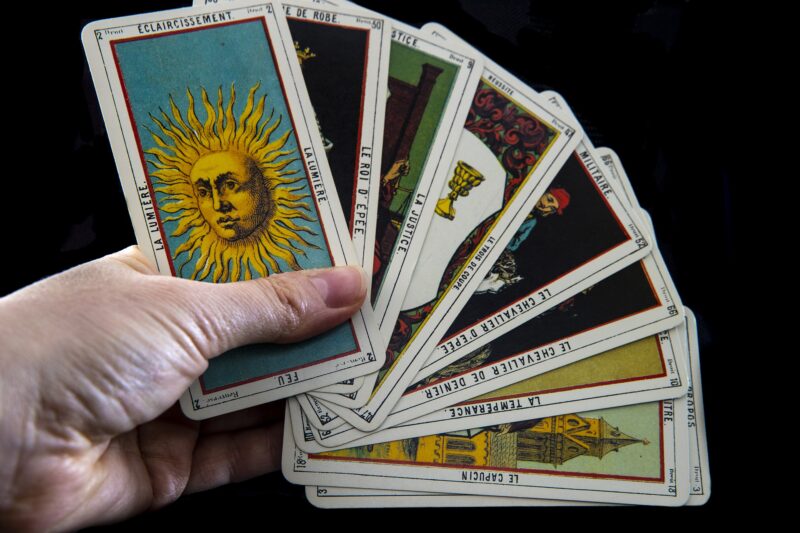
- This can involve objects like wooden sticks, bones, stones, or beans. Many modern board and card games evolved from these types of divinatory practices.
- Character Divination (测字): The diviner interprets Chinese characters provided by the seeker to determine the auspiciousness of the issue.
- Astrological Fate Reading (星命): This involves using a person's birth date, time, and geographic location in analogy with nature to predict outcomes.
- Dream Interpretation (占梦): Based on the content of dreams, comparisons are drawn with nature or events to derive predictive insights.
- Observing Qi (望气): Observing the color and patterns of the sky, primarily used in ancient times to predict the outcomes of wars; such methods were essential in ancient military texts.
- Sound Divination (音律): Using sounds or their qualities to predict or interpret human affairs.
- Portents and Omens (符瑞): Predicting fortune or disaster for individuals or nations based on unusual occurrences. These signs were often exploited for political purposes, such as in the Dazexiang Uprising led by Chen Sheng and Wu Guang.
- Children’s Rhymes (童谣): In the Han dynasty, children’s rhymes were believed to predict good or bad fortune. This is why in Romance of the Three Kingdoms, there are many prophetic examples involving rhymes. These are generally classified as a form of chenwei prophecy (hidden or coded prophecies).
Source: Pastoral Ministry Department of End-Time Ministry (Please notify us promptly if any copyright infringement is involved.)